Nov 112013
 

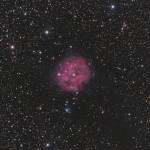
IC 5146 (also Caldwell 19, Sh 2-125, and the Cocoon Nebula) is a reflection[1]/emission[2] nebula and Caldwell object in the constellation Cygnus. The NGC description refers to IC 5146 as a cluster of 9.5 mag stars involved in a bright and dark nebula. The cluster is also known as Collinder 470.[3] It shines at magnitude +10.0[4]/+9.3[2]/+7.2.[5] Its celestial coordinates are RA 21h 53.5m, dec+47° 16′. It is located near the naked-eye star Pi Cygni, the open cluster NGC 7209 in Lacerta, and the bright open cluster M39.[1][4] The cluster is about 4,000 ly away, and the central star that lights it formed about 100,000 years ago;[6] the nebula is about 12 arcmins across, which is equivalent to a span of 15 light years.[5] When viewing IC 5146, dark nebula Barnard 168 (B168) is an inseparable part of the experience, forming a dark lane that surrounds the cluster and projects westward forming the appearance of a trail behind the Cocoon.
Description Courtesy of Wikipedia

Nov 112013
 

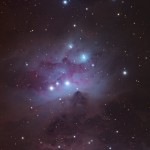
NGC 1973/5/7 is a reflection nebula 1/2 degree northeast of the Orion Nebula. The three NGC objects are divided by darker regions. It is also called The Running Man Nebula and Sharpless Catalog 279.

This object was named ‘The Running Man Nebula’ by Texas Astronomical Society member Jason Ware. Approximately 20 years ago his down stairs neighbor looked at the object and said it looked like a running man. He brought this up a TAS club meeting and the name stuck. Now widely accepted as ‘The Running Man’.

Description Courtesy of Wikipedia

Oct 282013
 

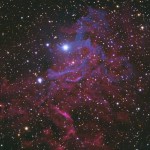
IC 405 (also known as the Flaming Star Nebula, SH 2-229, or Caldwell 31) is an emission/reflection nebula[1] in the constellation Auriga, surrounding the bluish star AE Aurigae. It shines at magnitude +6.0. Its celestial coordinates are RA 05h 16.2m dec +34° 28′.[2] It surrounds the irregular variable star AE Aurigae and is located near the emission nebula IC 410, the open clusters M38 and M36, and the naked-eye K-class star Hassaleh. The nebula measures approximately 37.0′ x 19.0′, and lies about 1,500 light-years away.[2] It is believed that the proper motion of the central star can be traced back to the Orion’s Belt area.[2] The nebula is about 5 light-years across.[1]

Description Courtesy of Wikipedia

Oct 012013
 
Oct 012013
 
Aug 302013
 

Mediocre conditions at my dark site in terms of haze / fog early on turning to all fog later so only 2.5 hours of exposure on this one.  Combined with the new light pollution from the gas companies this isn’t a great image but it was a good test for the A694 camera and the Atlas mount throwing the longish AP130EDT f/8 refractor around.

AP130EDT f/8 Apogee A694 CCD Atlas EQ-G 60 min Lum, 30 min each R,G,B

AP130EDT f/8
Apogee A694 CCD
Atlas EQ-G
60 min Lum, 30 min each R,G,B


Aug 282013
 

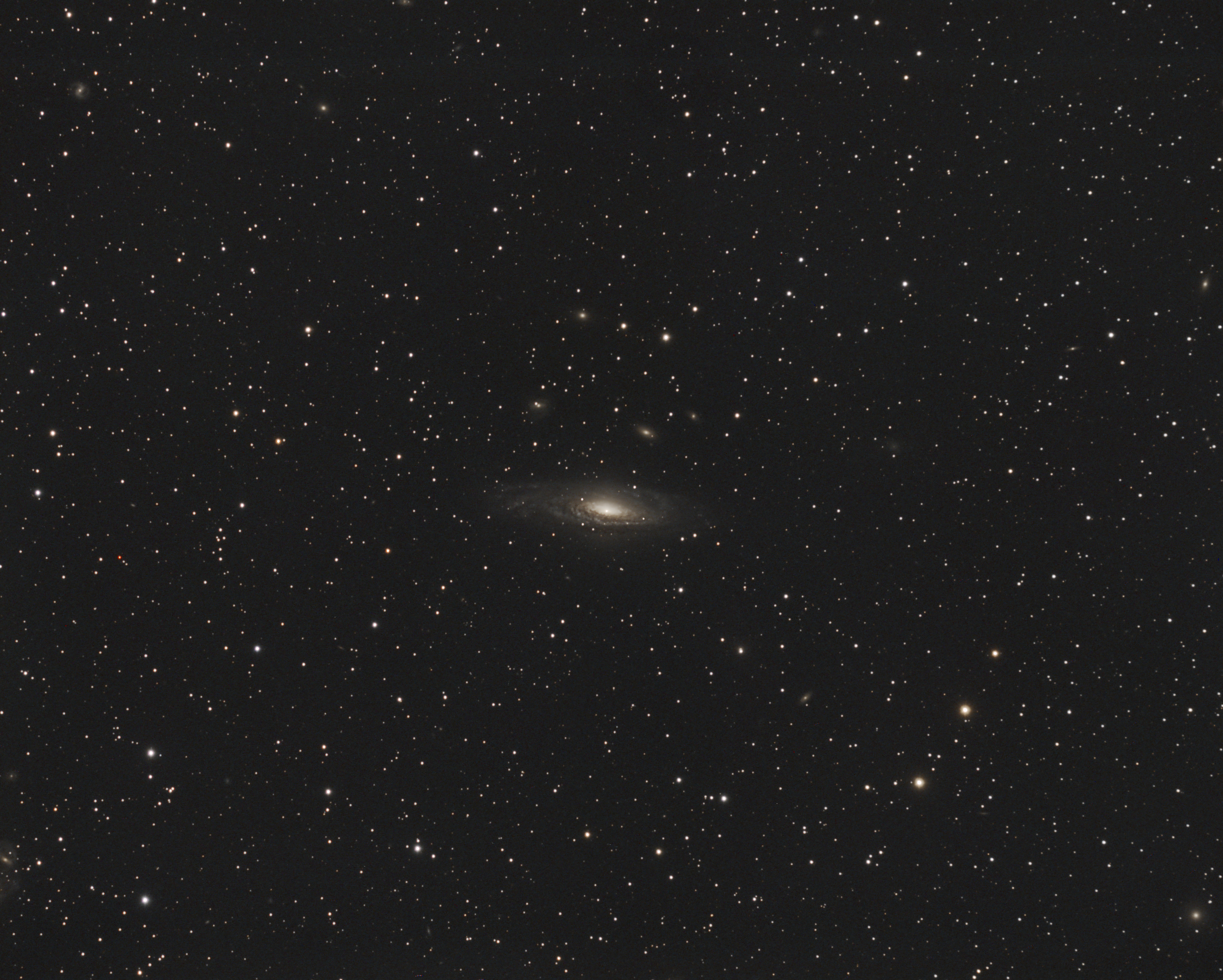
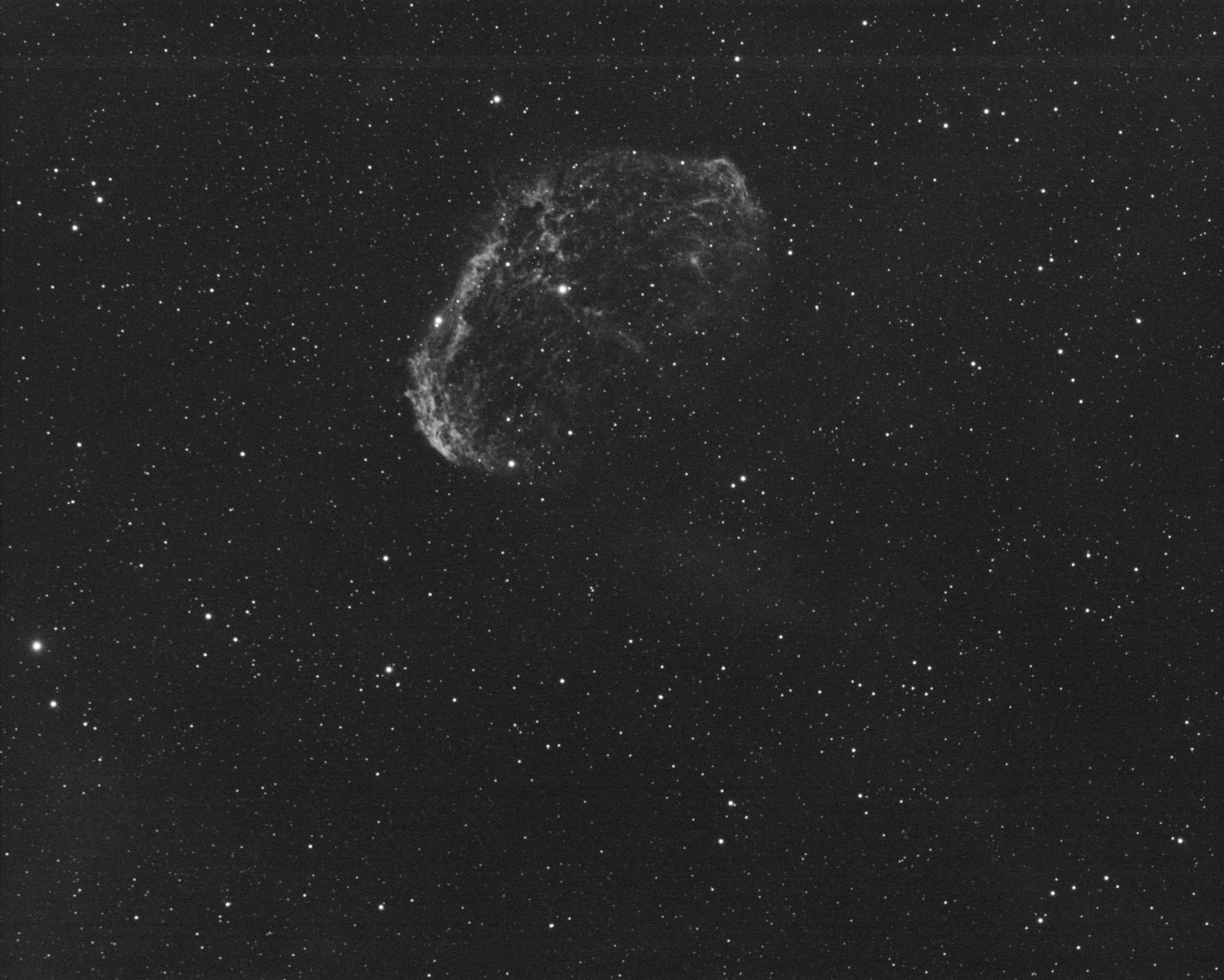
The A694 finally saw first light after an extended bought of bad weather and other personal issues.  This is a single 20 minute frame without any bias, dark, or flat calibration taken through an AP130EDT f/8 reduced to f/6.35 with the AP 0.75X reducer all riding on an Atlas mount.


Apogee A694 First Light AP130EDT w/ Reducer Atlas EQ-G No Calibration

Apogee A694 First Light
AP130EDT w/ Reducer
Atlas EQ-G
No Calibration

Aug 242013
 

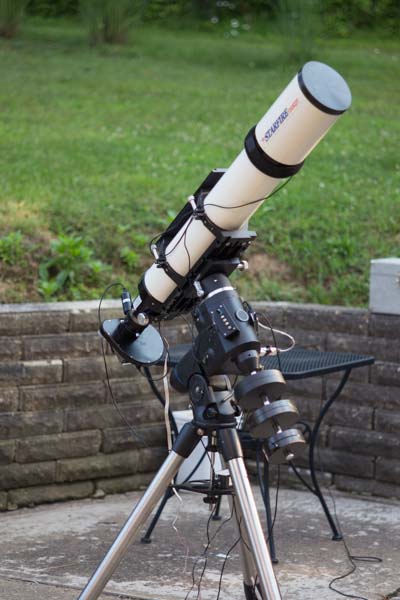
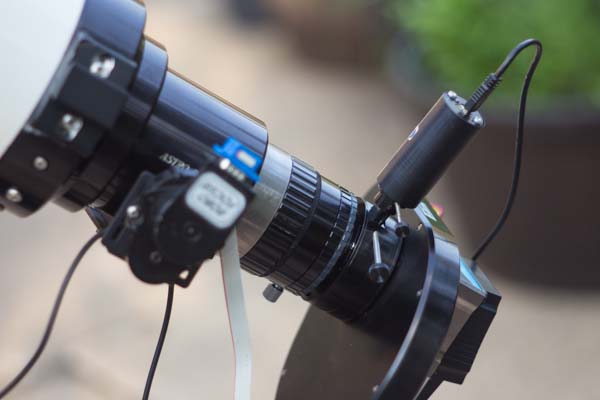
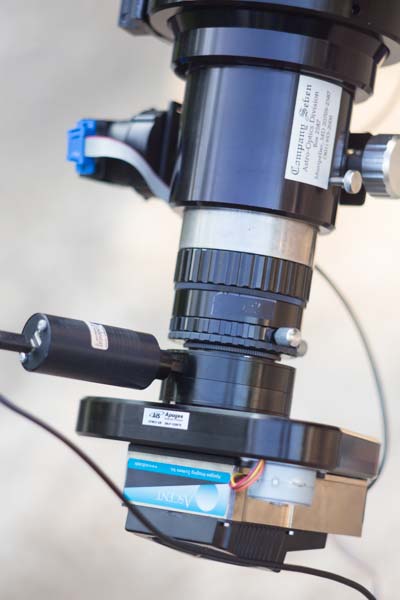
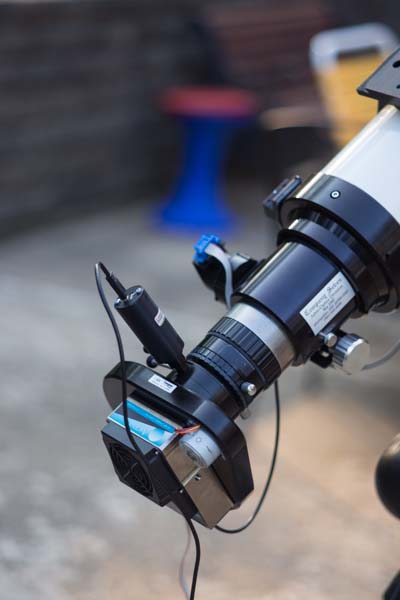
I recently took delivery on a long awaited Apogee A694 CCD Camera.  This camera uses the Sony ICX694AGL Chip which sports 4.54 x 4.54 micron sized pixels with a high peak QE of 77% and low read noise / dark current.  The small size and light weight of the camera head (1.4 lbs) and integrated filterwheel (1.85 lbs) is a pleasant change from the U8300 and U16 with massive filterwheels requiring very robust focusers.  The short backfocus allows allows 1.25″ filters to be used without vignetting on 4/3’s size chips like the A8050 camera which I also have on hand.  The short backfocus also allows standard camera lens use in front of the FW and I am working on testing adapters for Pentax M42 screw mount lenses as well as eventually making an adapter for Canon Eos lenses.  The 694 is a somewhat smaller chip than the KAI-8050 used int he A8050 but it boasts better sensitivity and improved noise characteristics particularly when looking at Hydrogen Alpha emission line imaging.  (Interline chips typically drop off in sensitivity in the red but the Sony chip seems to far better than most in this regard.)

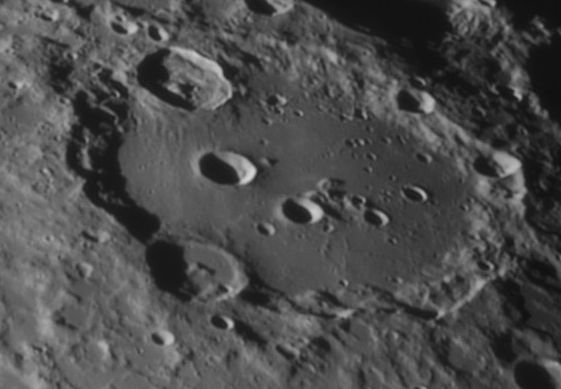
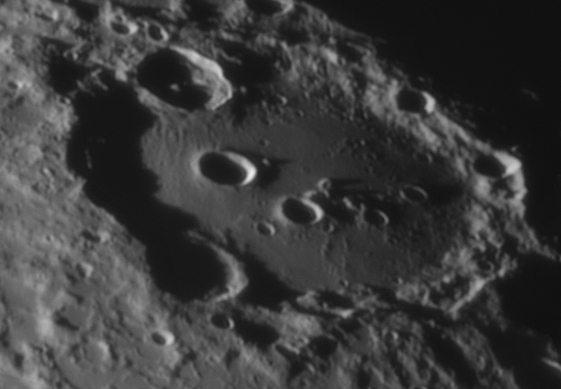
IMG_2102 IMG_2104 IMG_2108 IMG_2113