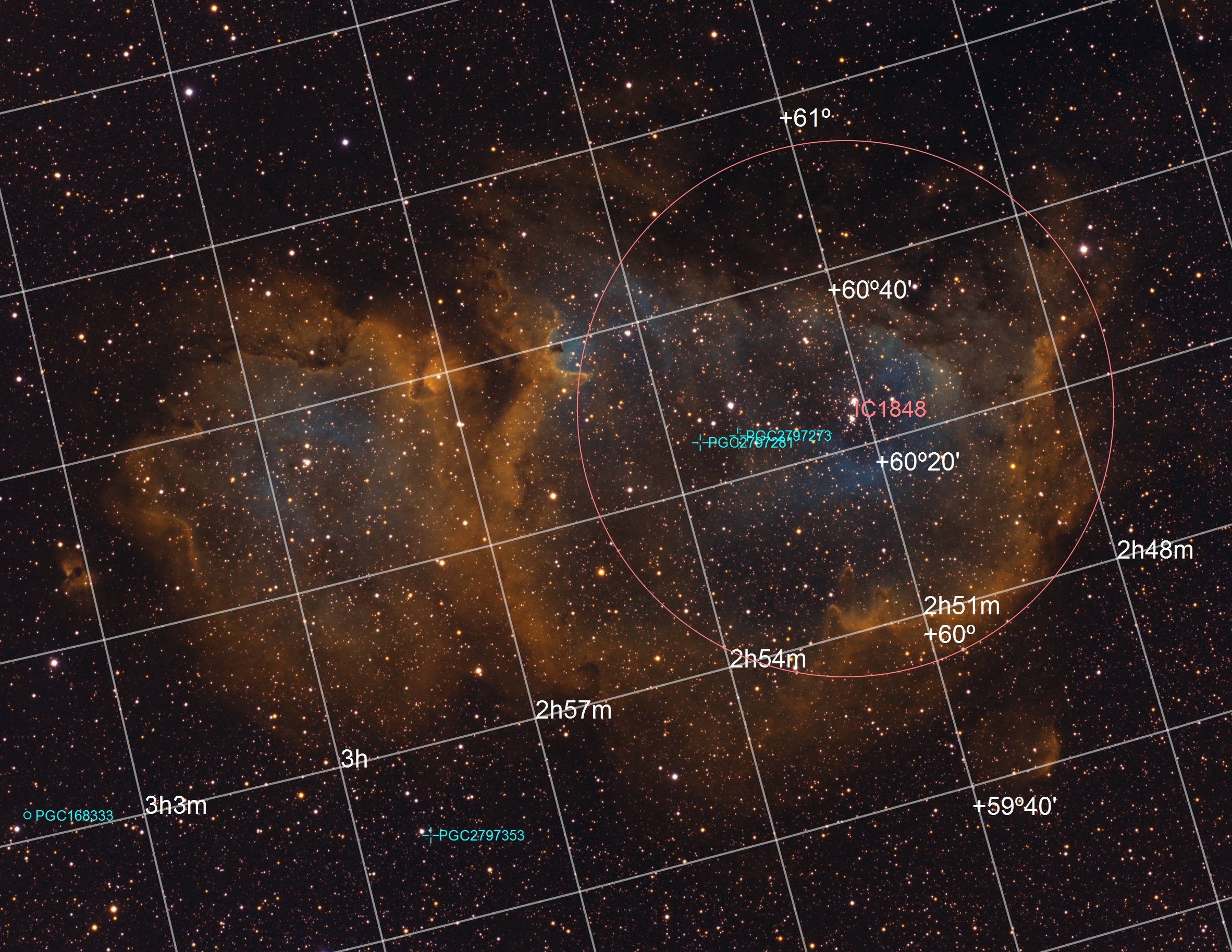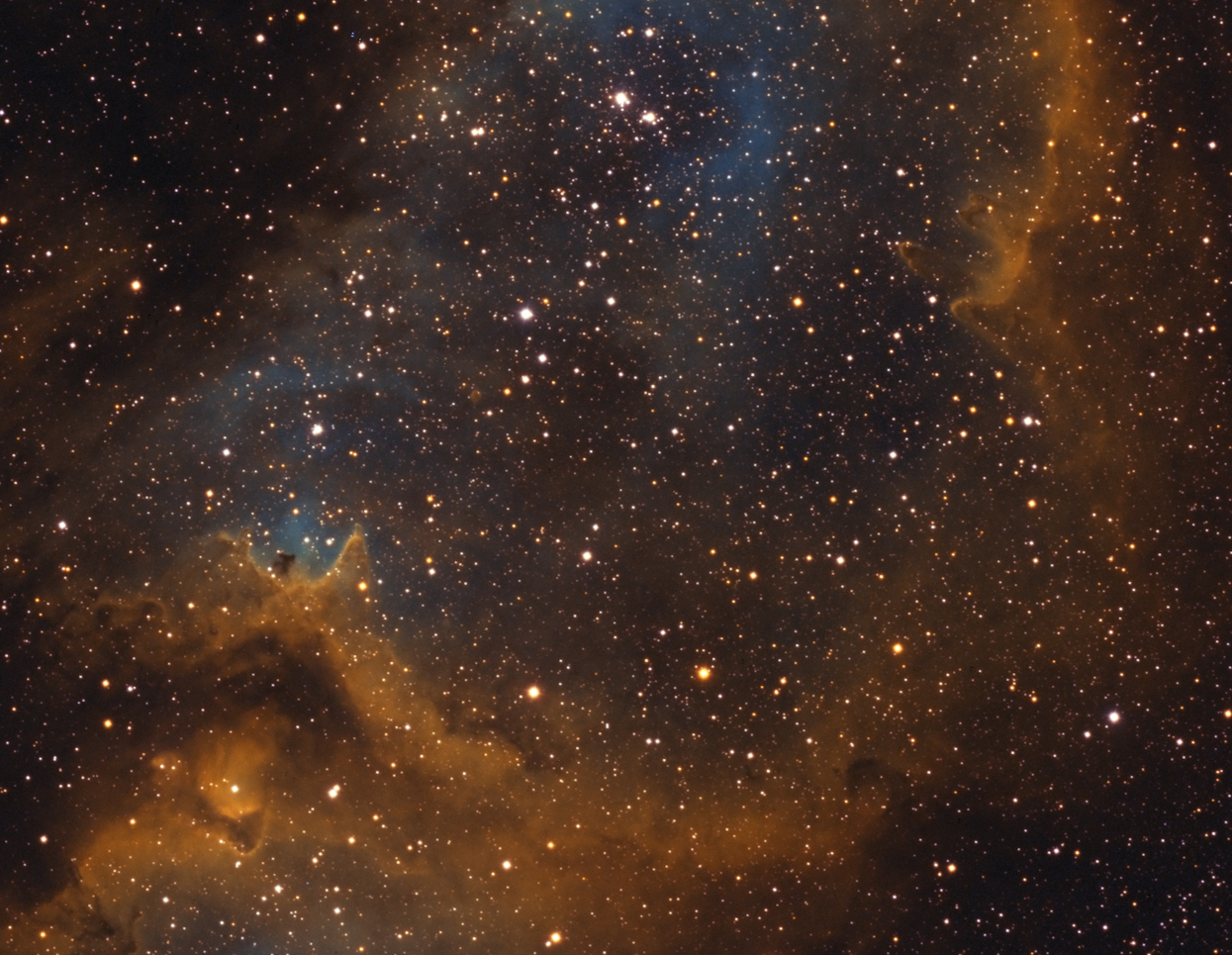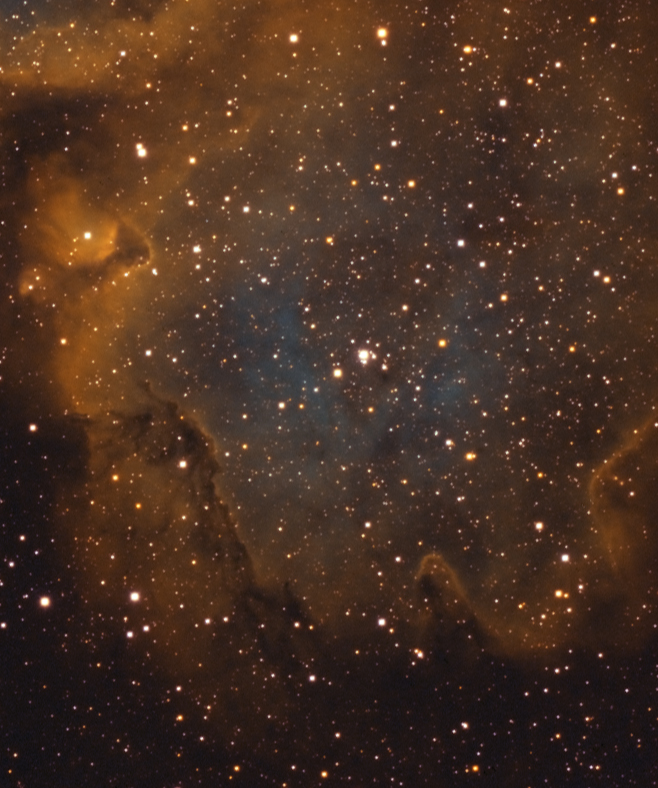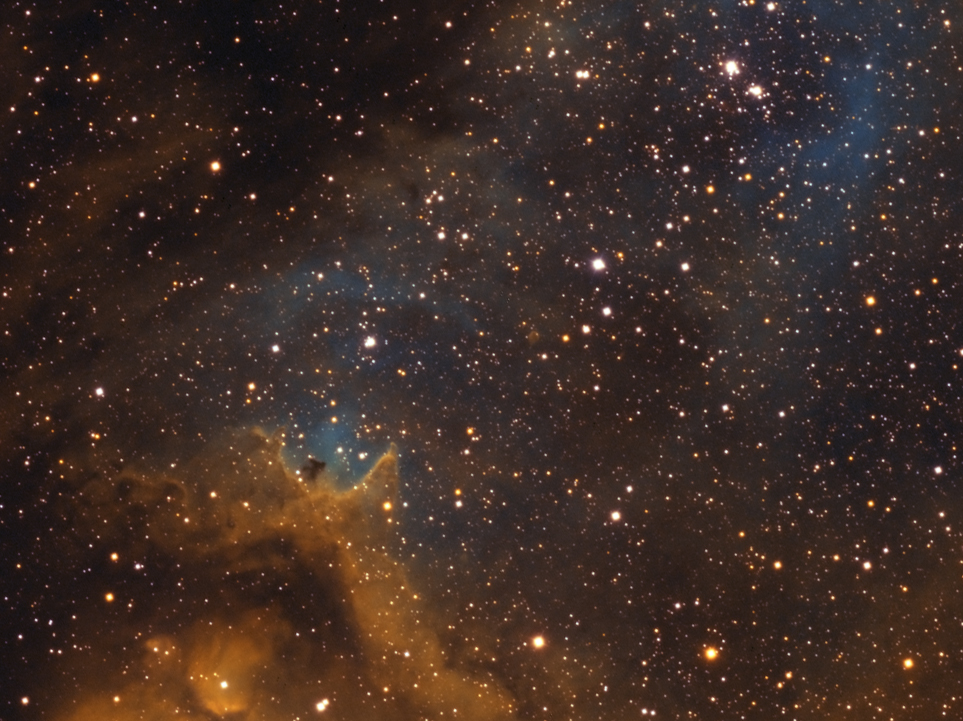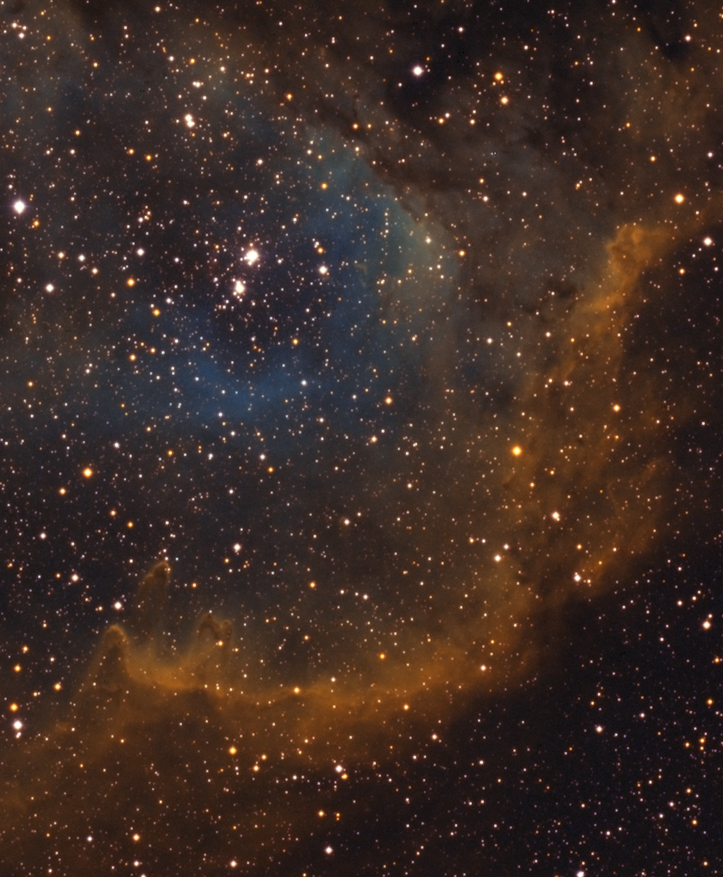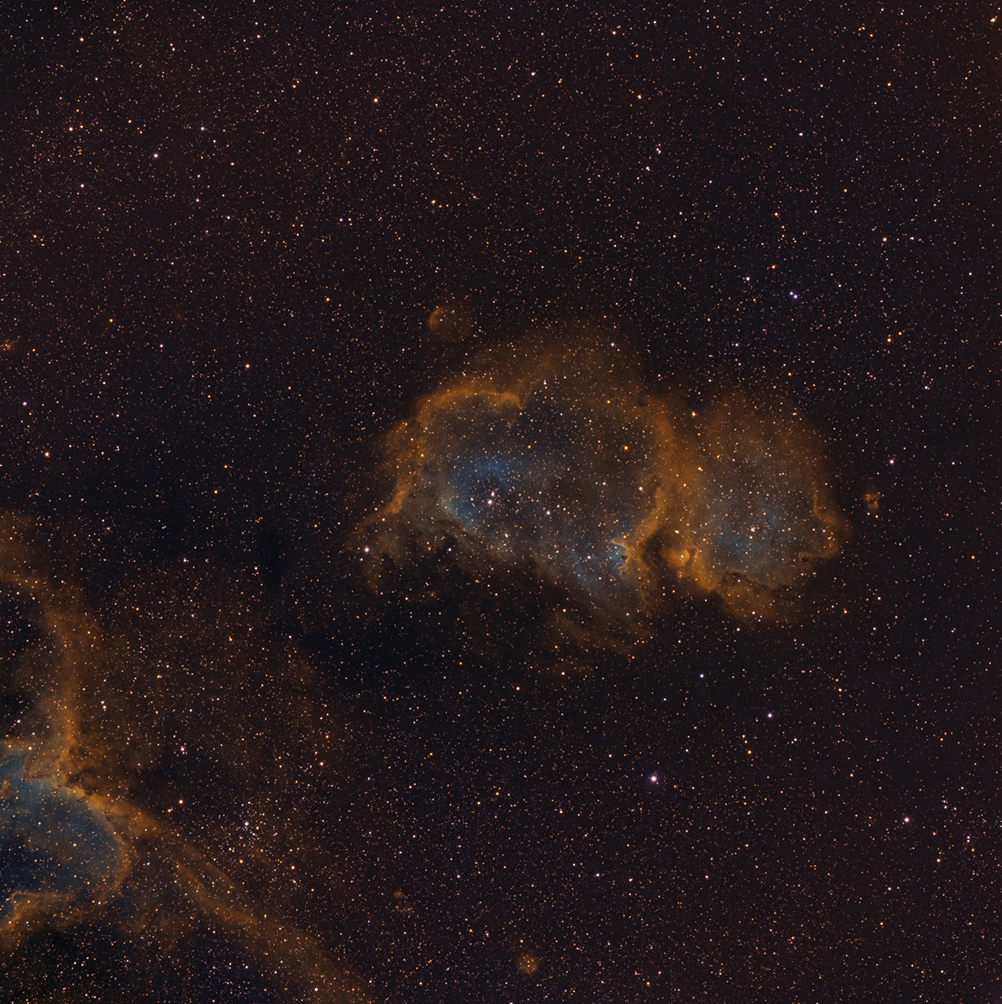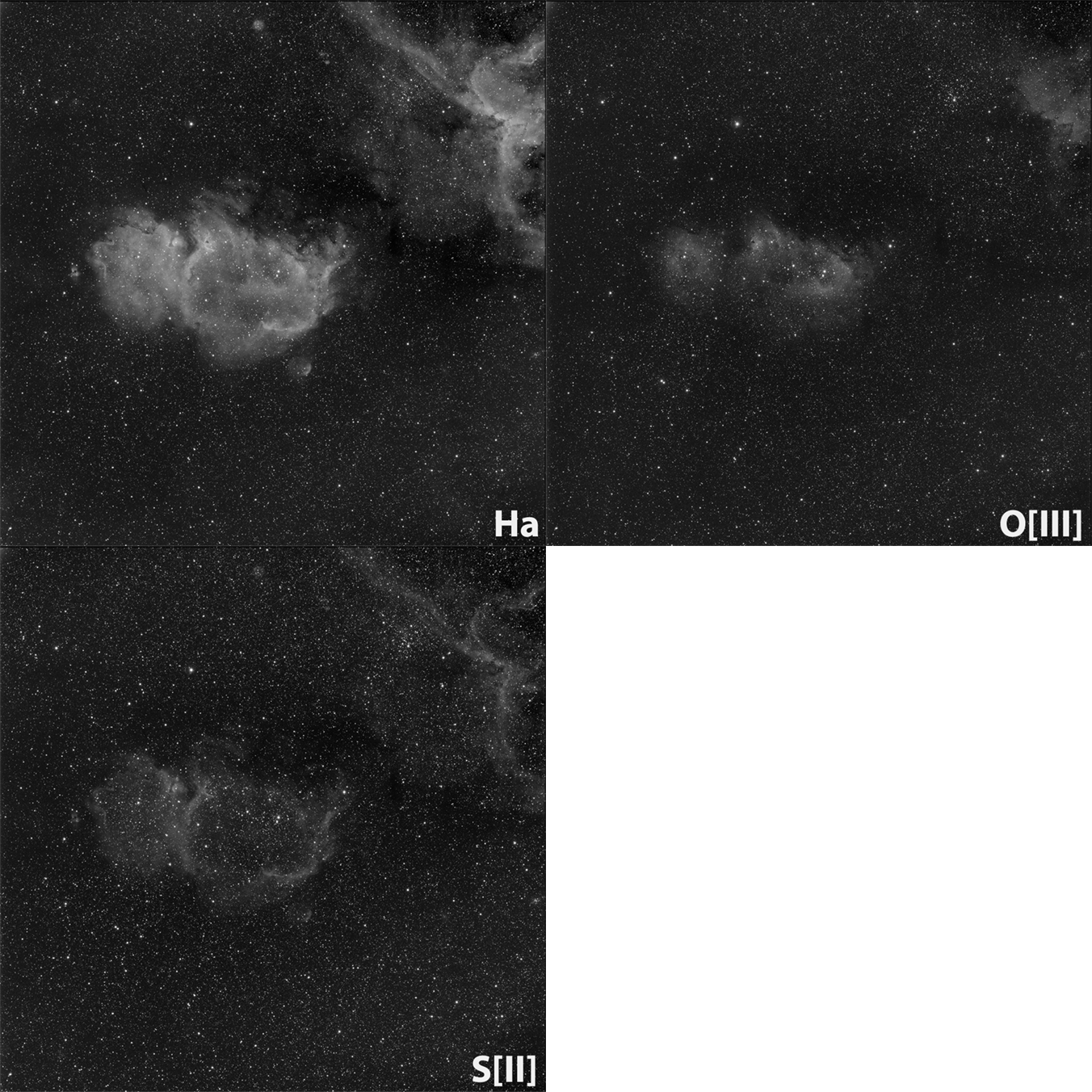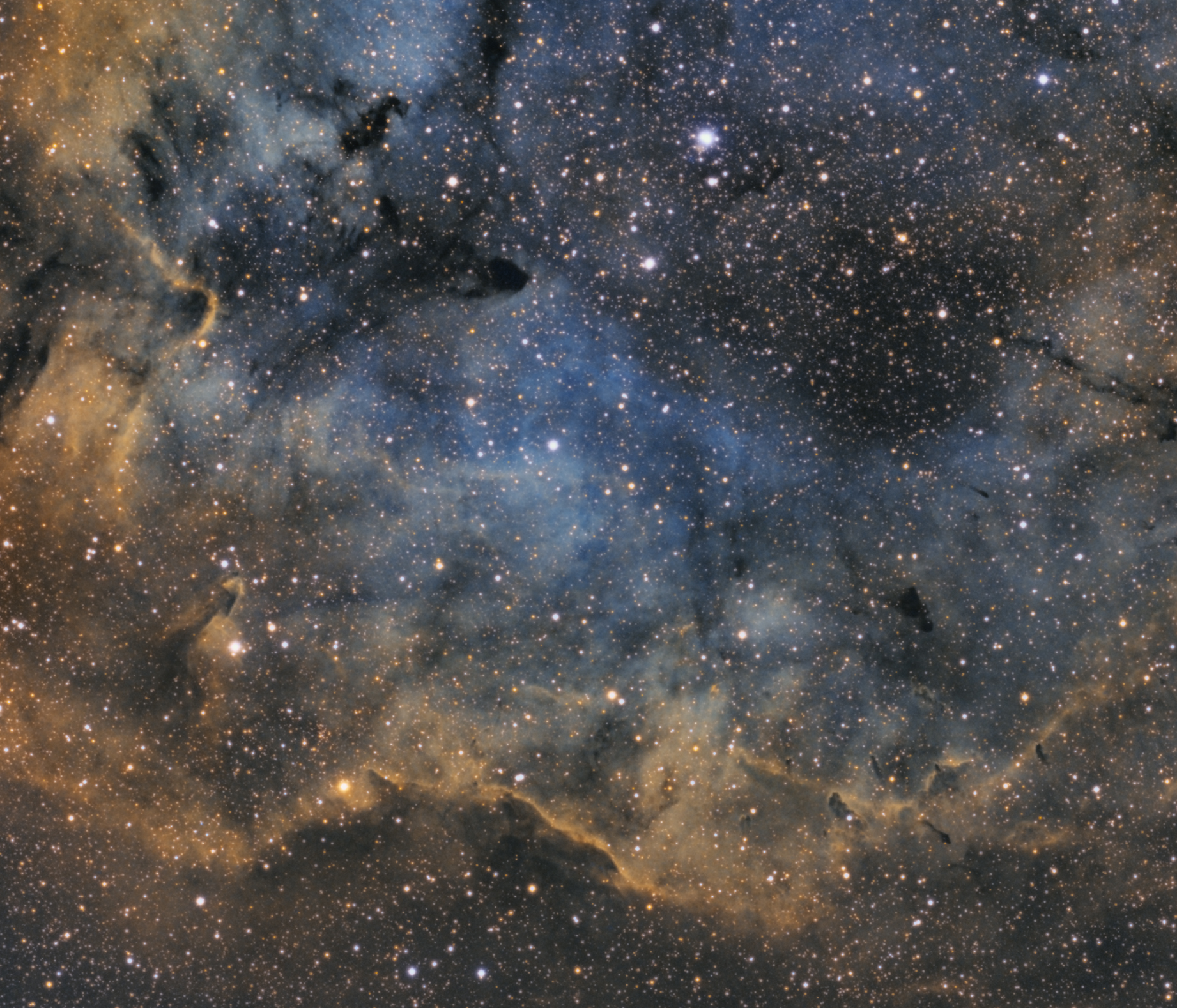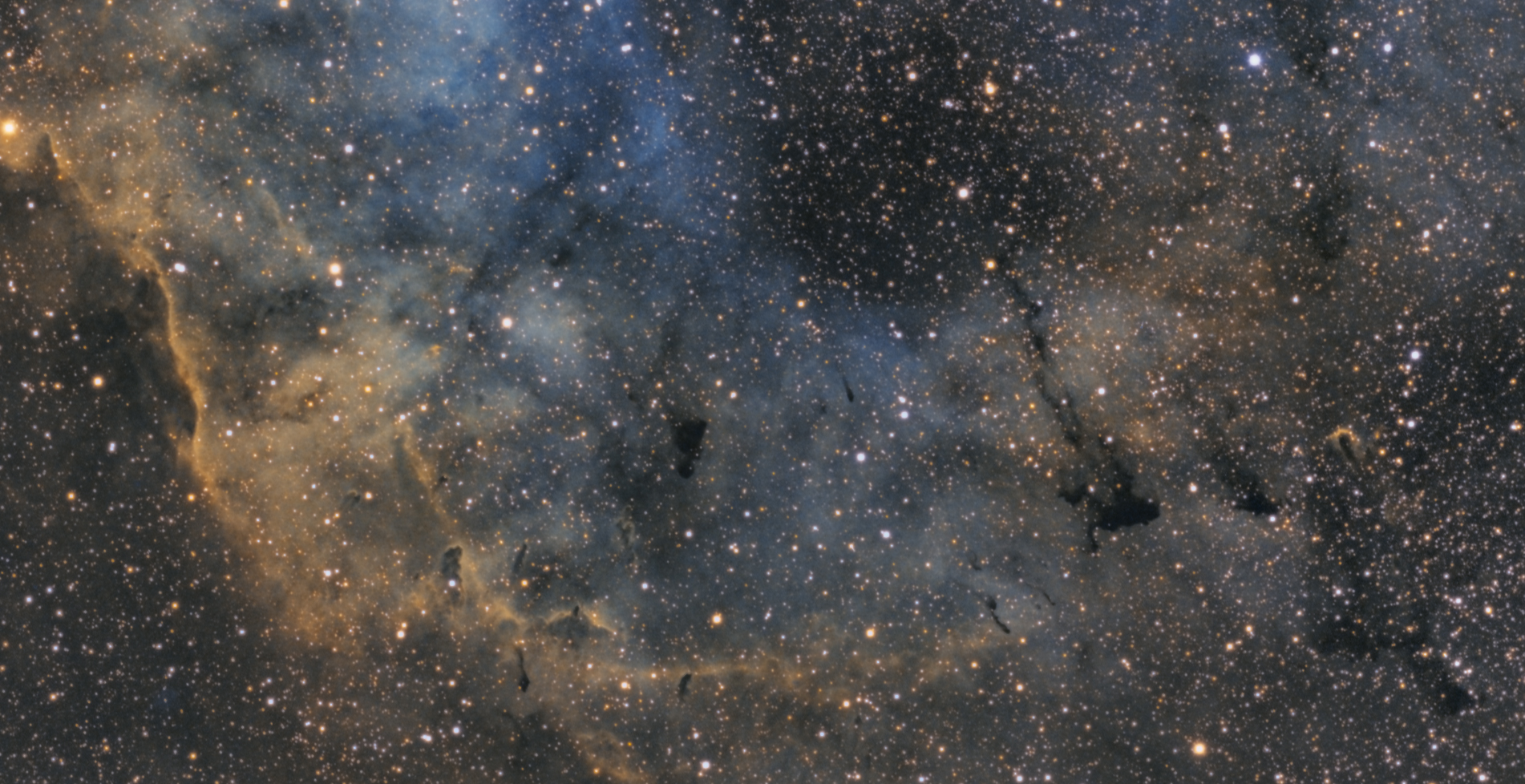
I began work on a tri-color Hubble Pallet image during the summer of 2014 but due to weather and other obligations did not capture much in the way of Oxygen [O III] and Sulfur [S II] emission data for the mosaic project so am leaving it as a monochrome image using only the Hydrogen Alpha emission line data.
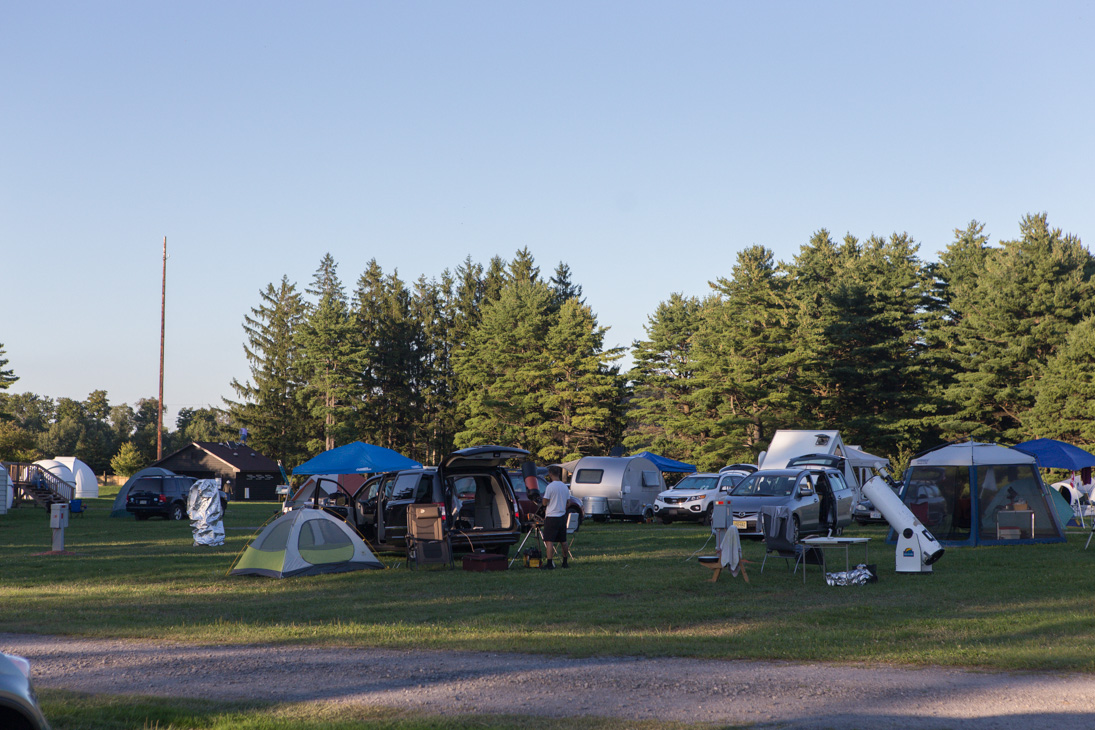
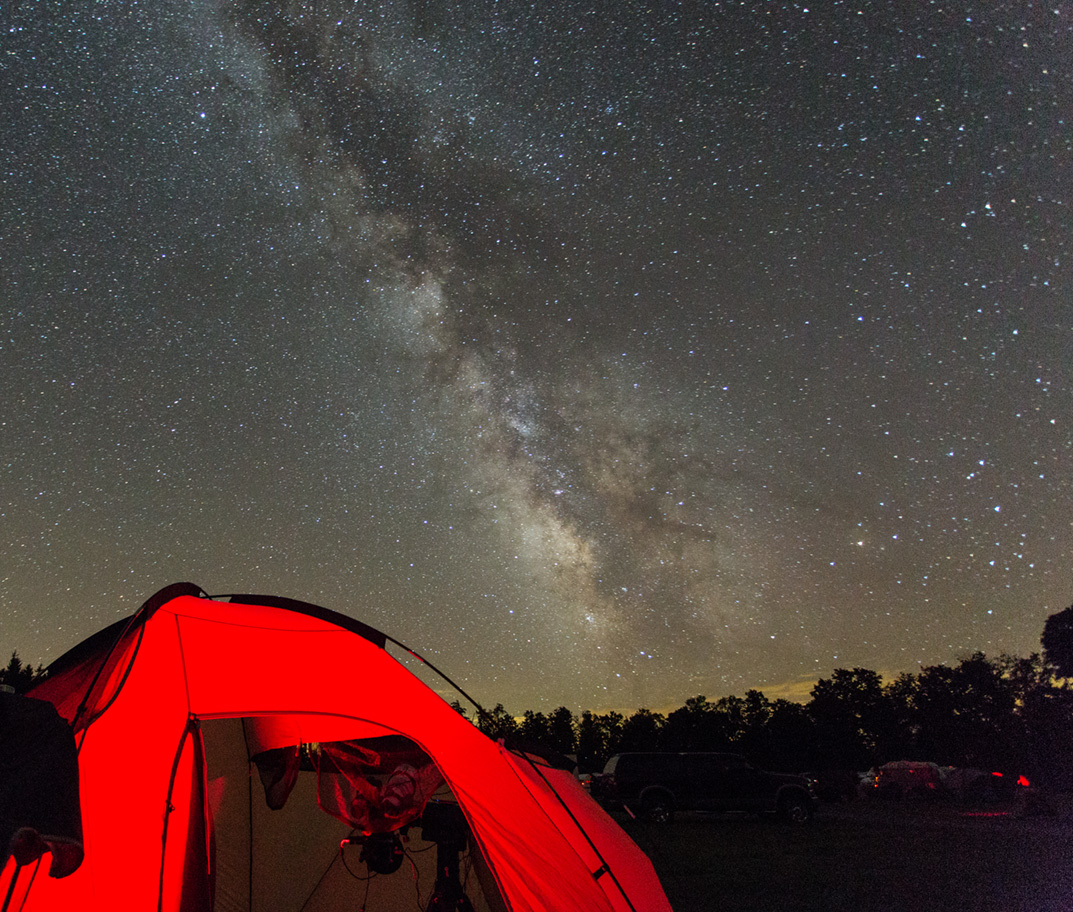
Monday night was my first visit to a dark site; or at least my first visit since catching the astronomy bug. Upon arriving at Cherry Springs after the 4 hour drive I noticed there were quite a few people still hanging around after the Black Forest Star Party which was held over the weekend. According to some of the other amateur astronomers, the weekend star party was a bust.
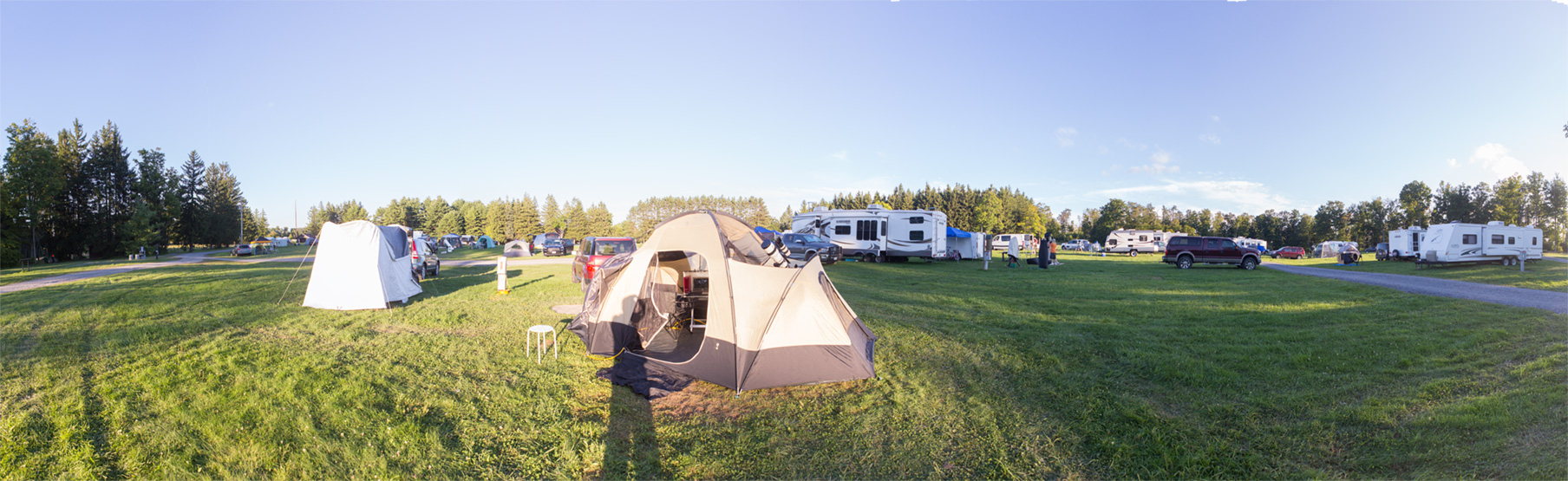
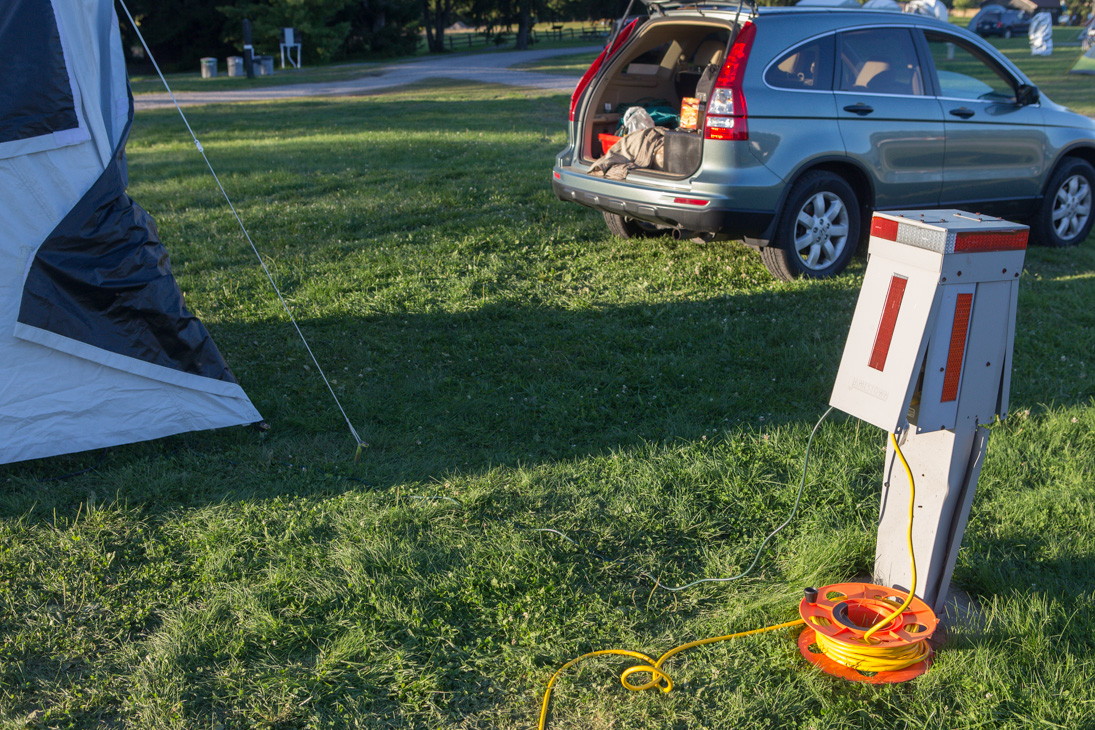
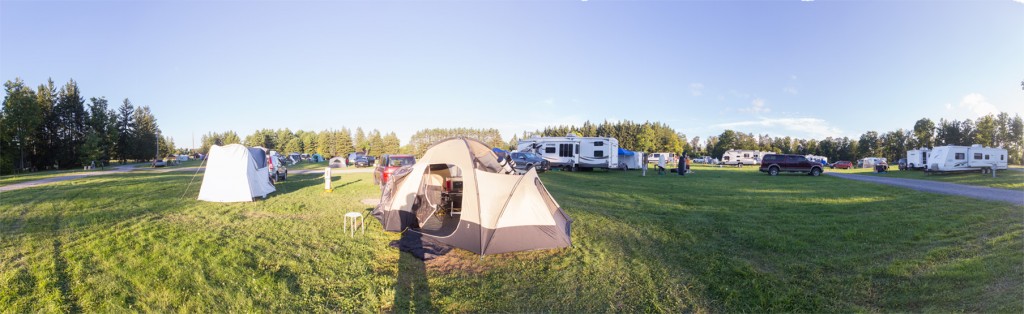
We found a vacant spot to setup our tents right next to one of the RV style power outlet posts scattered throughout the observing fields. I can’t stress how wonderful it is to have power provided on the field for the astrophotographically inclined!
The grounds were well kept and the main bathrooms much nicer than expected. The surrounding area is gorgeous for anyone who enjoys the outdoors.
- Frank’s Tent

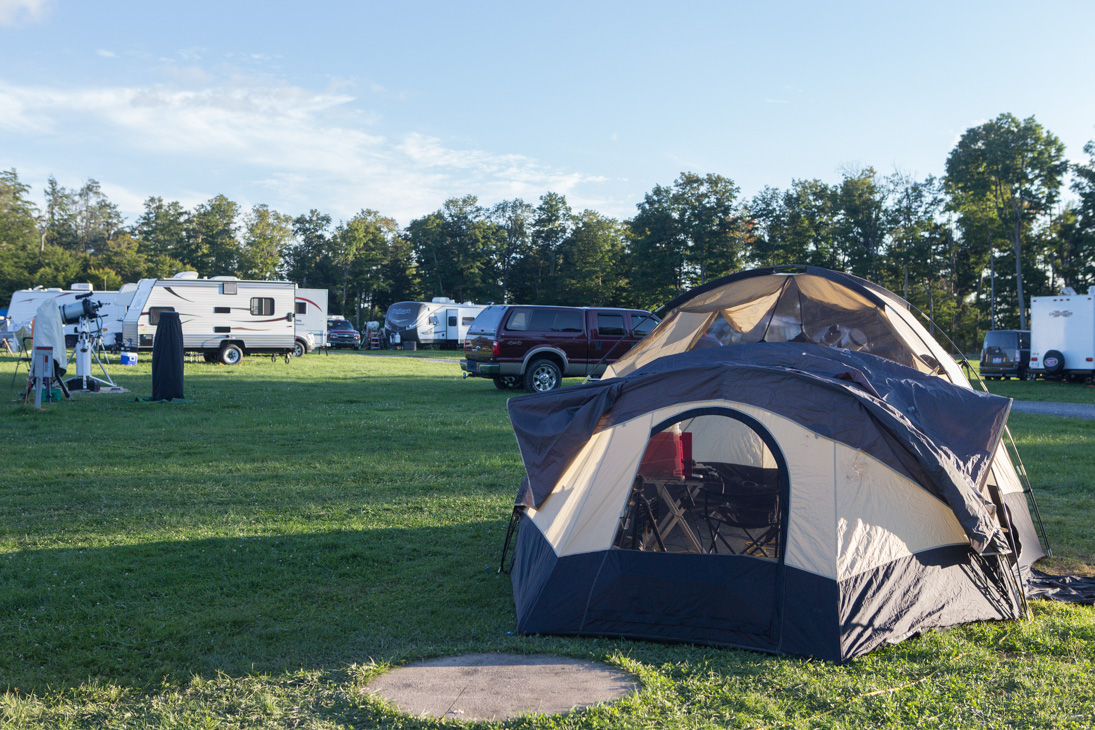
- My Astronomy Tent
- Power Stations
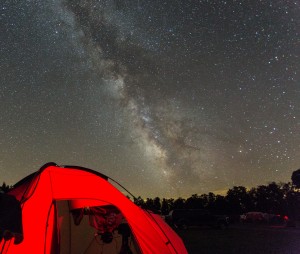
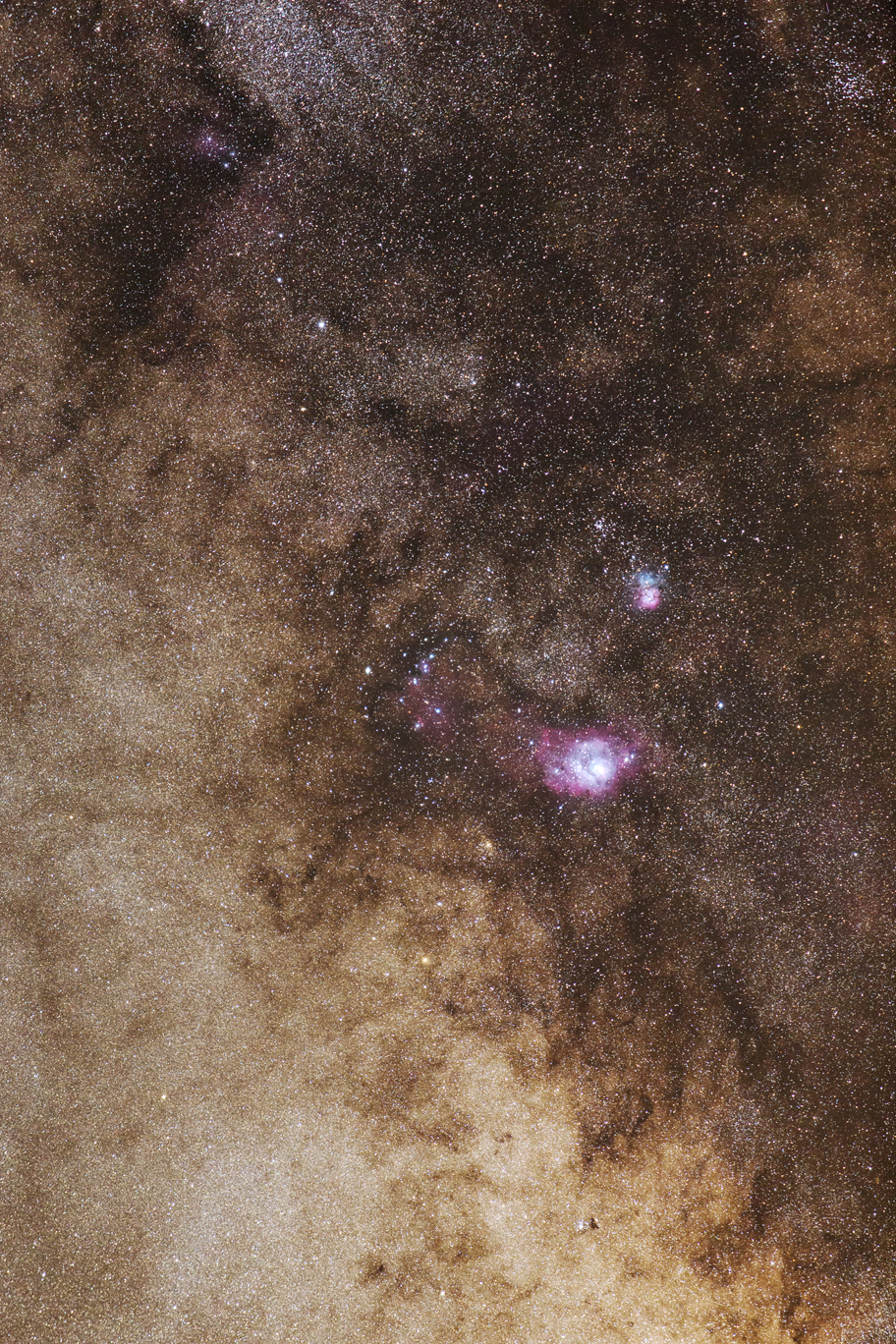
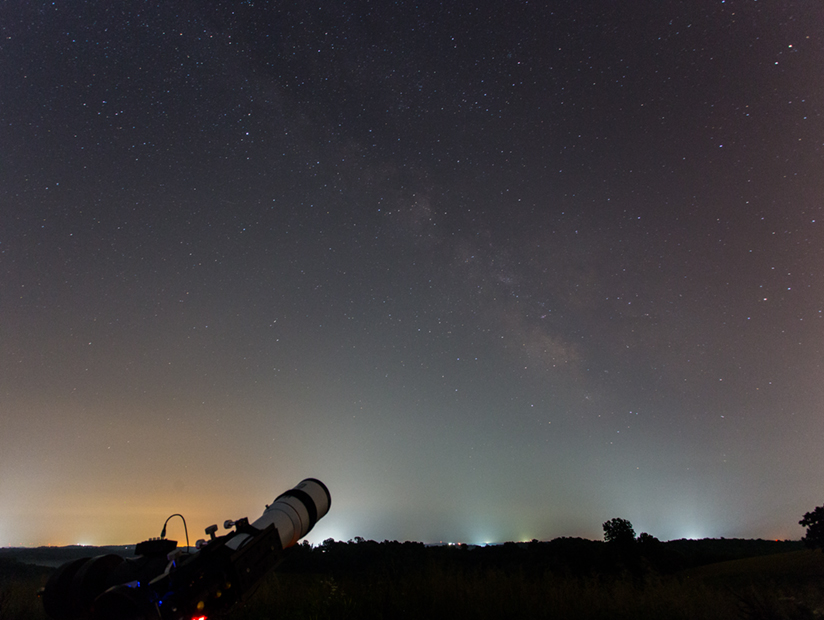
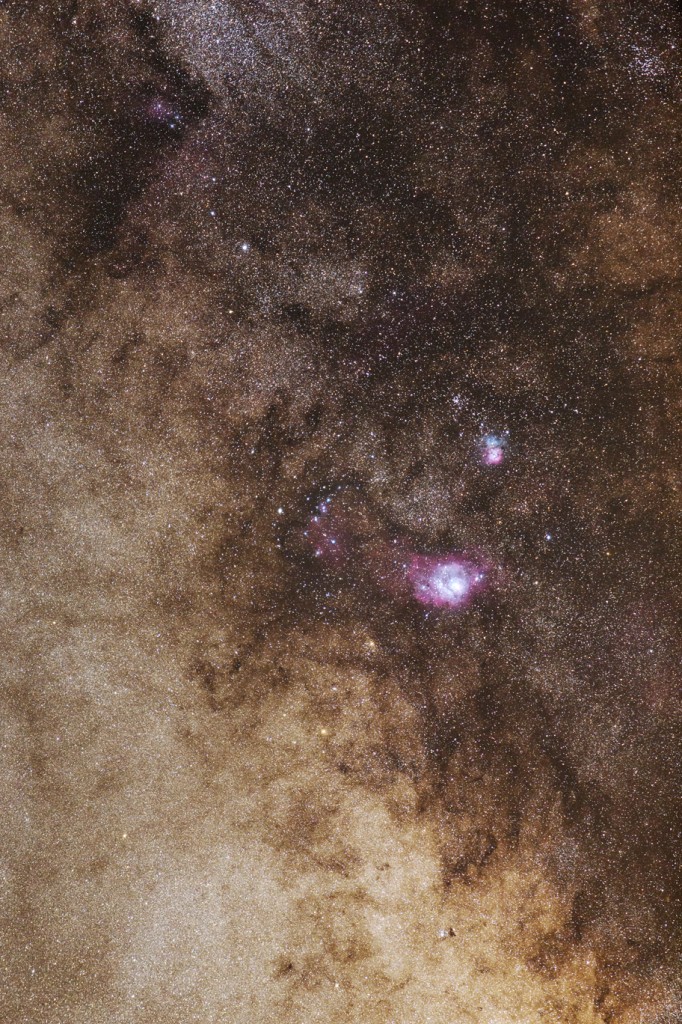
As nice as the park was, the show obviously didn’t start until the sun went down. The Milky Way was more prominent before astronomical twilight than I’m used to seeing here in the PGH region after astronomical twilight; even at the Greene County site. By 10:00pm it was gorgeous and I snapped a quick 3o second shot on a tripod and marveled that the dark lanes extending out from the Rho Ophiuchi / Antares region were clearly visible in a short exposure so close to the horizon.
Seeing the sky like this puts everything in a different perspective.
Yes, it’s depressing being back in light polluted Pittsburgh but I’m really glad I finally made it out to Cherry Springs after all this time.
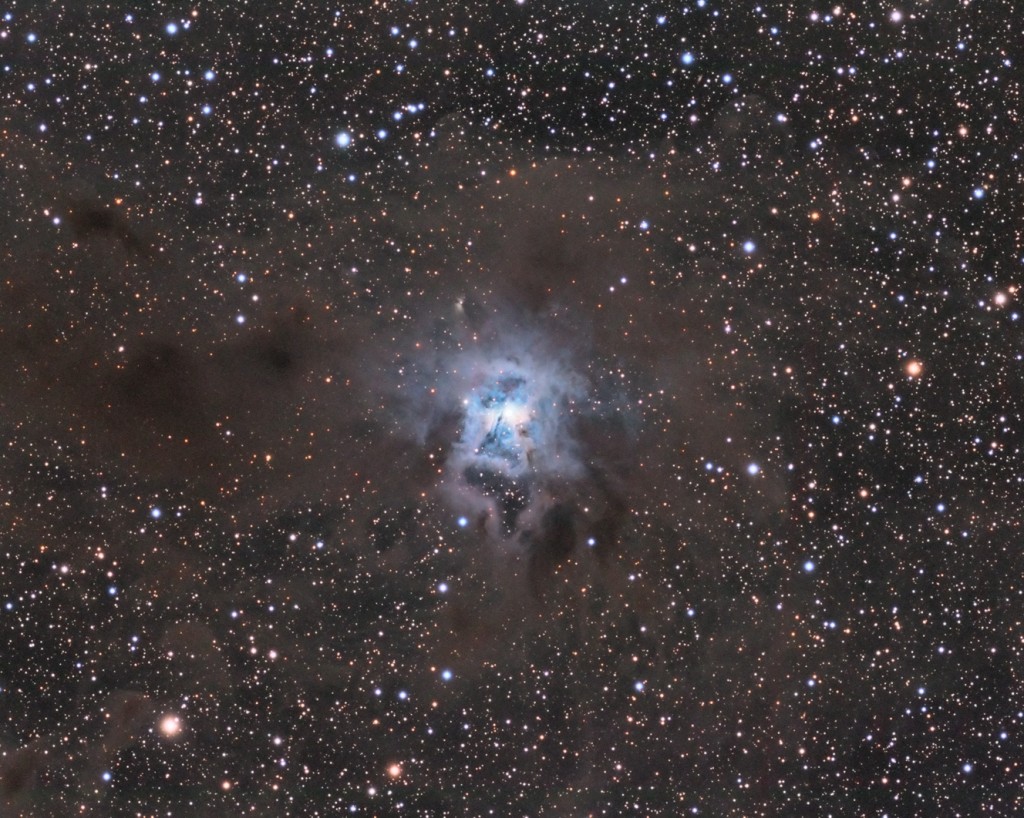
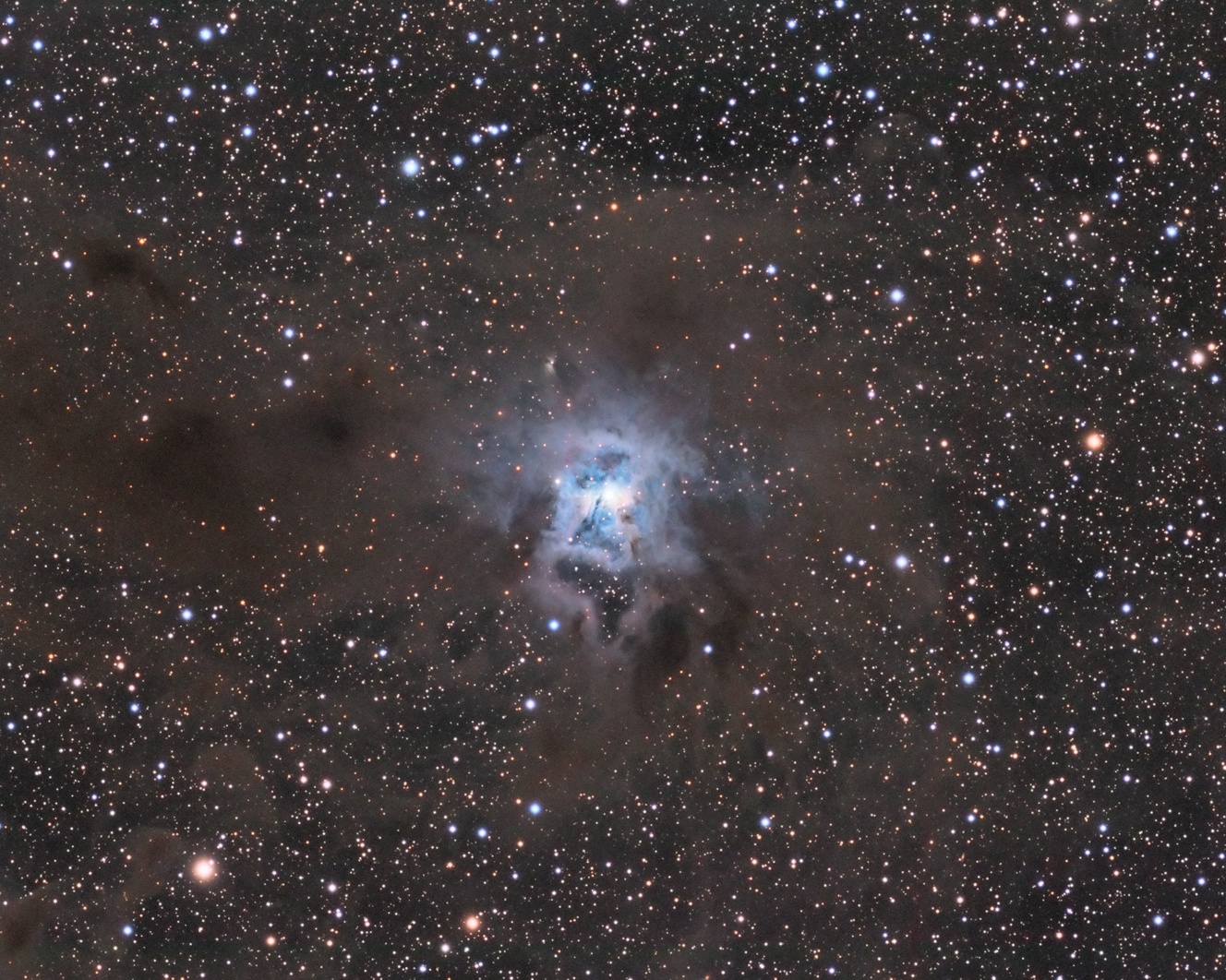
I had plans to shoot some other objects but due to poor planning and setup of my tent I couldn’t take some of the deep southern objects I was hoping for. I settled for 5.5 hours of exposure time on NGC 7023: The Iris Nebula. I have shot the Iris before but was never totally happy. I’m still not quite satisfied but it’s certainly better than what I’ve gotten around here.
NGC 7023 Atlas EQ-G Mount Stellarvue SVQ100 – 100mm f/5.8 Quadruplet Apogee Ascent A694 CCD 5.5 Hours Total LRGB Exposure
The Iris Nebula, also NGC 7023 and Caldwell 4, is a bright reflection nebula and Caldwell object in the constellation Cepheus. NGC 7023 is actually the cluster within the nebula, LBN 487, and the nebula is lit by a magnitude +7 star, SAO 19158.[1] It shines at magnitude +6.8. It is located near the Mira-type variable star T Cephei, and near the bright magnitude +3.23 variable star Beta Cephei (Alphirk). It lies 1,300 light-years away and is six light-years across.[2]
Courtesy of Wikipedia.
Another decent night at the AAAP Greene County Dark Sky Site.
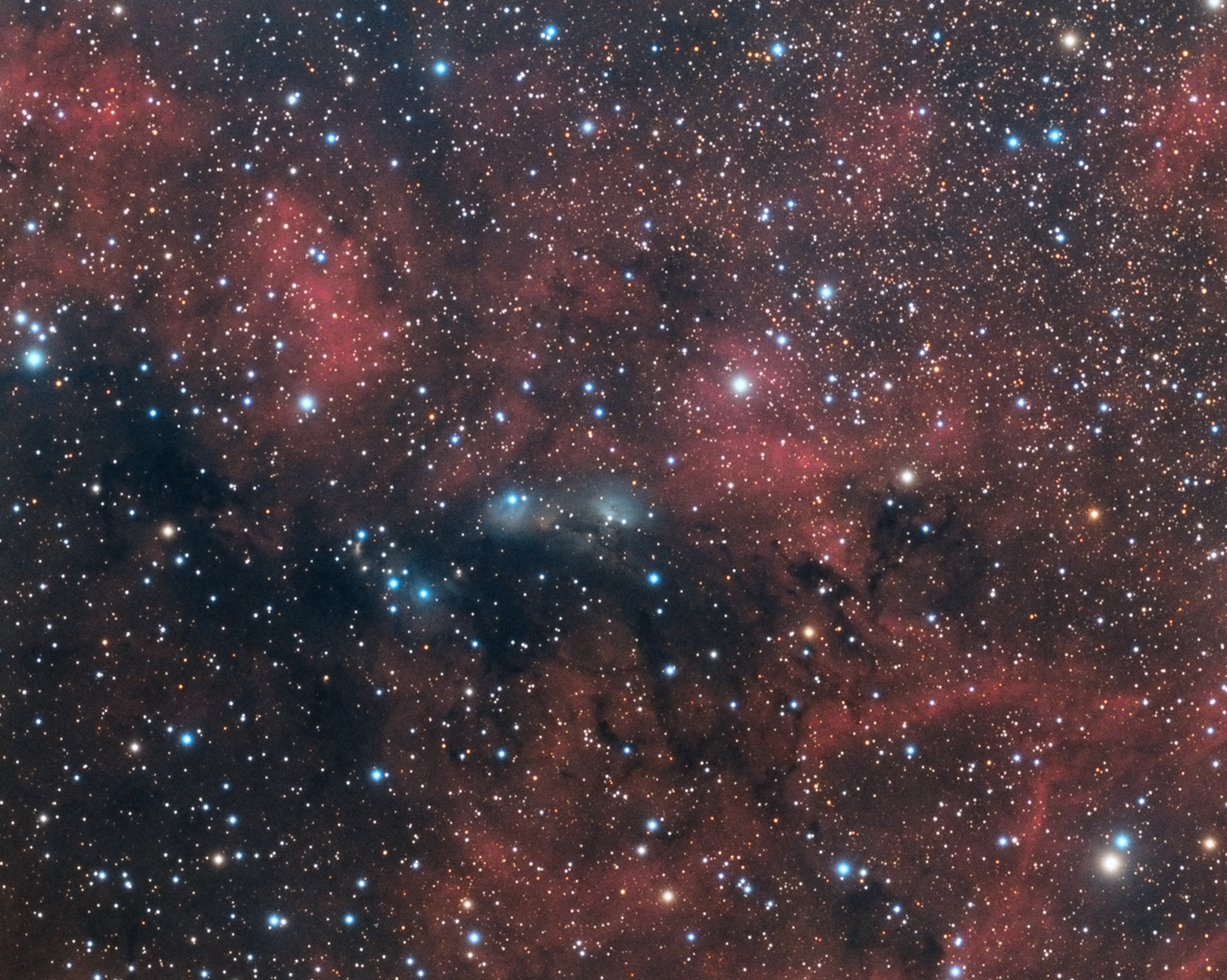
NGC 6914 is a reflection nebula nestled amongst the diffuse emission nebula in Cygnus.

NGC 6914
SVQ-100
Apogee Ascent A694
Atlas EQ-G w/eqmod
5x10min Lum
6x10min Red
6x10min Green
6x10min Blue
Total: 3.8 Hours
Greene County, PA
Playing around with an 8mm circular fisheye lens as well for an all sky timelapse.
[youtube:http://youtu.be/l92QPyDS_GQ]
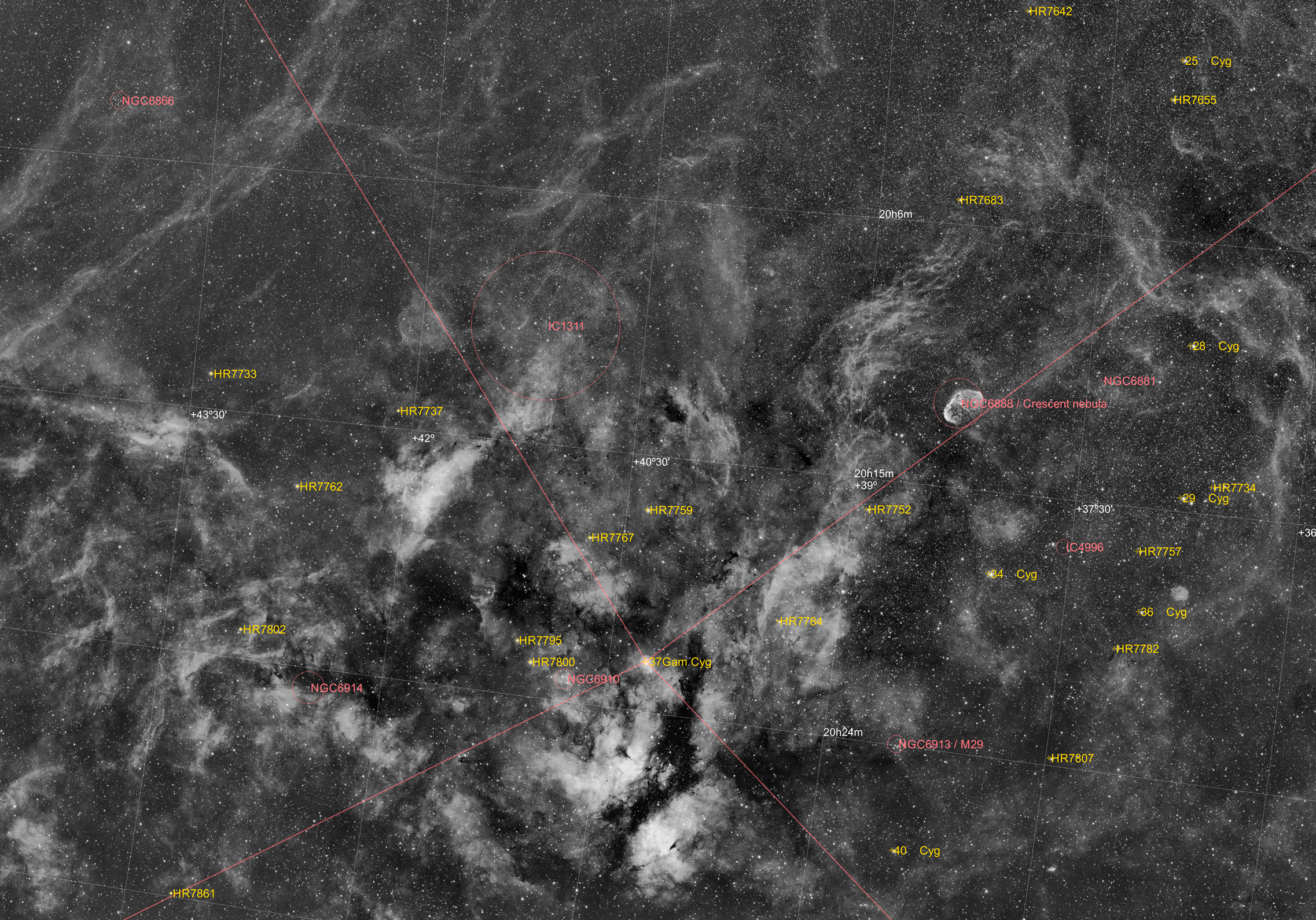
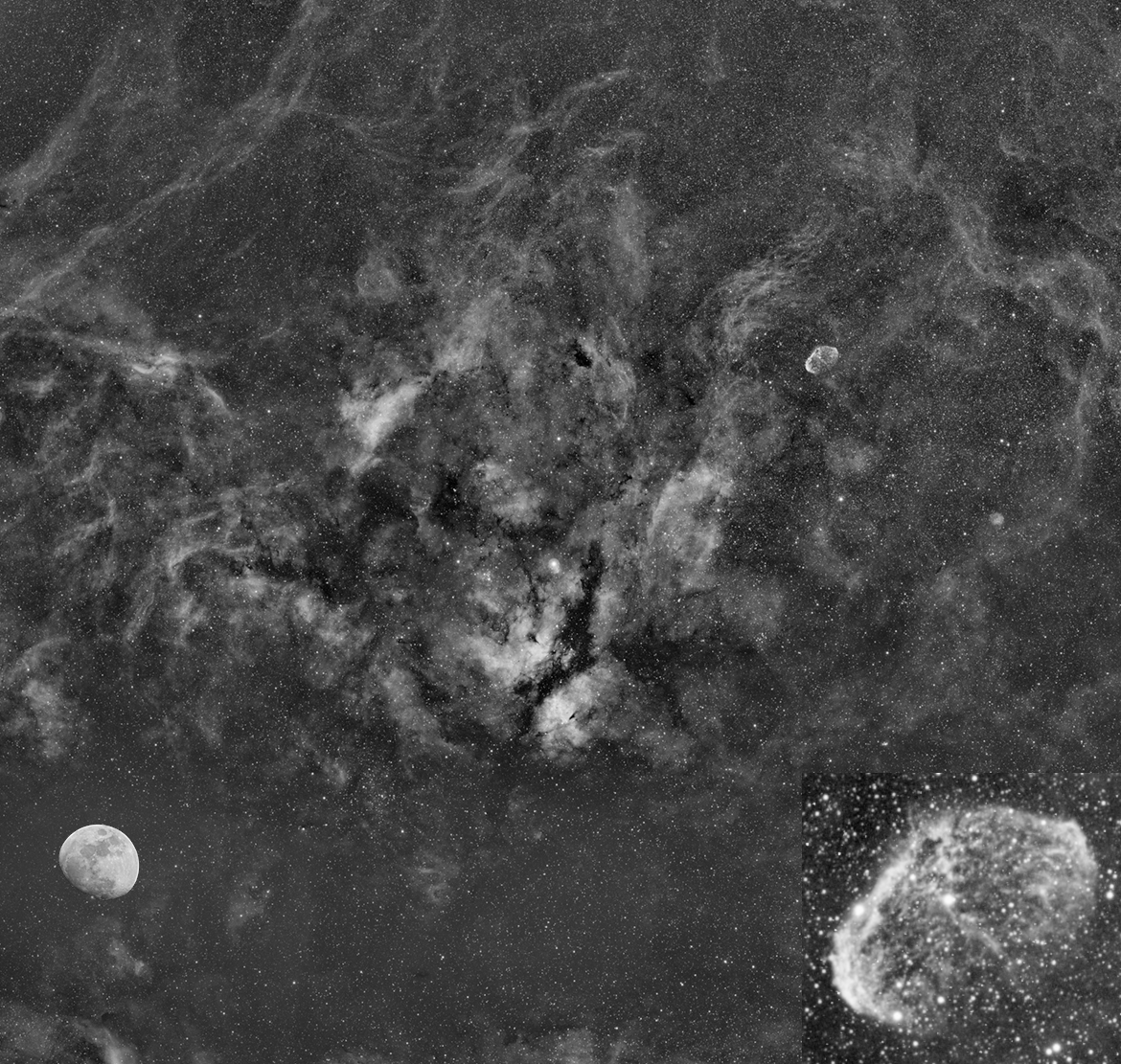
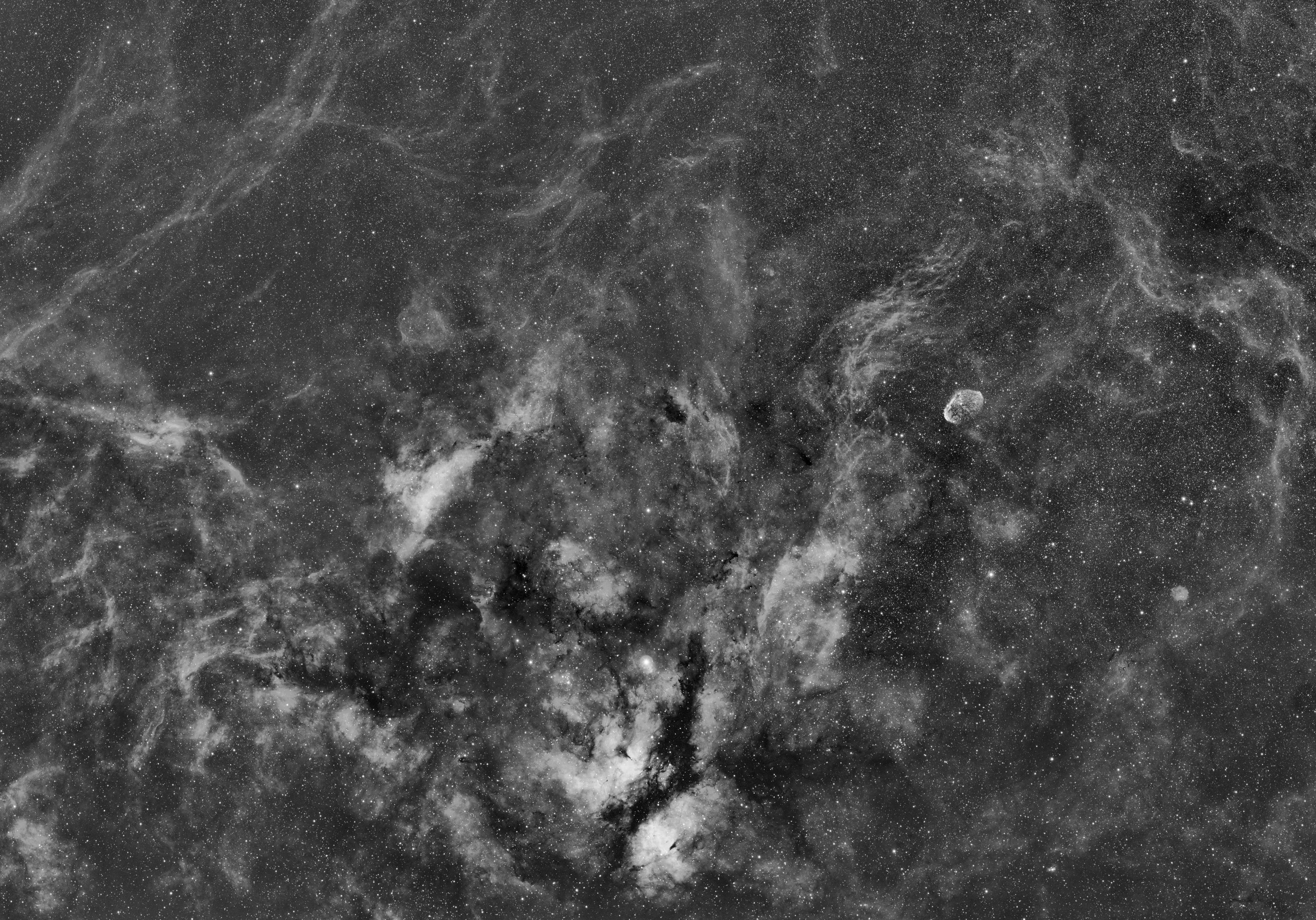
It’s that time of year when Cygnus rises high over head and displays a multitude of nebulous treasure. This mosaic is only a portion of the Cygnus constellation but represents a large patch of sky almost 9 x 9 degrees. This is only a test framing as I create a game plan for a summer long imaging project. For a sense of scale, I have included a gibbous moon which was not part of the original image as well as a full scale crop of the Crescent Nebula, bottom right, to show the full size scale of the original 83 megapixel image.

Cygnus Mosaic in Hydrogen Alpha FSQ-106ED Apogee U16 AP900GTO Baader Ha Narrowband Filter 9x20min total exposure
- IC 1396 – The Elephant Trunk
FSQ-106ED
Apogee U16
AP900GTO Mount
MMOAG w/ ST-402
9.5 Hours Total Exposure
Baader Ha, O[III], S[II] filters
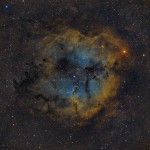
The Elephant’s Trunk nebula is a concentration of interstellar gas and dust within the much larger ionized gas region IC 1396 located in the constellation Cepheus about 2,400 light years away from Earth.[1] The piece of the nebula shown here is the dark, dense globule IC 1396A; it is commonly called the Elephant’s Trunk nebula because of its appearance at visible light wavelengths, where there is a dark patch with a bright, sinuous rim. The bright rim is the surface of the dense cloud that is being illuminated and ionized by a very bright, massive star that is just to the west of IC 1396A. (In the Figure above, the massive star is just to the left of the edge of the image.) The entire IC 1396 region is ionized by the massive star, except for dense globules that can protect themselves from the star’s harsh ultraviolet rays.
The Elephant’s Trunk nebula is now thought to be a site of star formation, containing several very young (less than 100,000 yr) stars that were discovered in infrared images in 2003. Two older (but still young, a couple of million years, by the standards of stars, which live for billions of years) stars are present in a small, circular cavity in the head of the globule. Winds from these young stars may have emptied the cavity.
The combined action of the light from the massive star ionizing and compressing the rim of the cloud, and the wind from the young stars shifting gas from the center outward lead to very high compression in the Elephant’s Trunk nebula. This pressure has triggered the current generation of protostars.[2]
- Heart and Soul Mosaic
The Heart Nebula, IC 1805, Sh2-190, lies some 7500 light years away from Earth and is located in the Perseus Arm of the Galaxy in the constellation Cassiopeia. This is an emission nebula showing glowing gas and darker dust lanes. The nebula is formed by plasma of ionized hydrogen and free electrons.
The very brightest part of this nebula (the knot at the right) is separately classified as NGC 896, because it was the first part of this nebula to be discovered.
The nebula’s intense red output and its configuration are driven by the radiation emanating from a small group of stars near the nebula’s center. This open cluster of stars known as Melotte 15 contains a few bright stars nearly 50 times the mass of our Sun, and many more dim stars that are only a fraction of our Sun’s mass. The cluster used to contain a microquasar that was expelled millions of years ago.
Description courtesy of Wikipedia
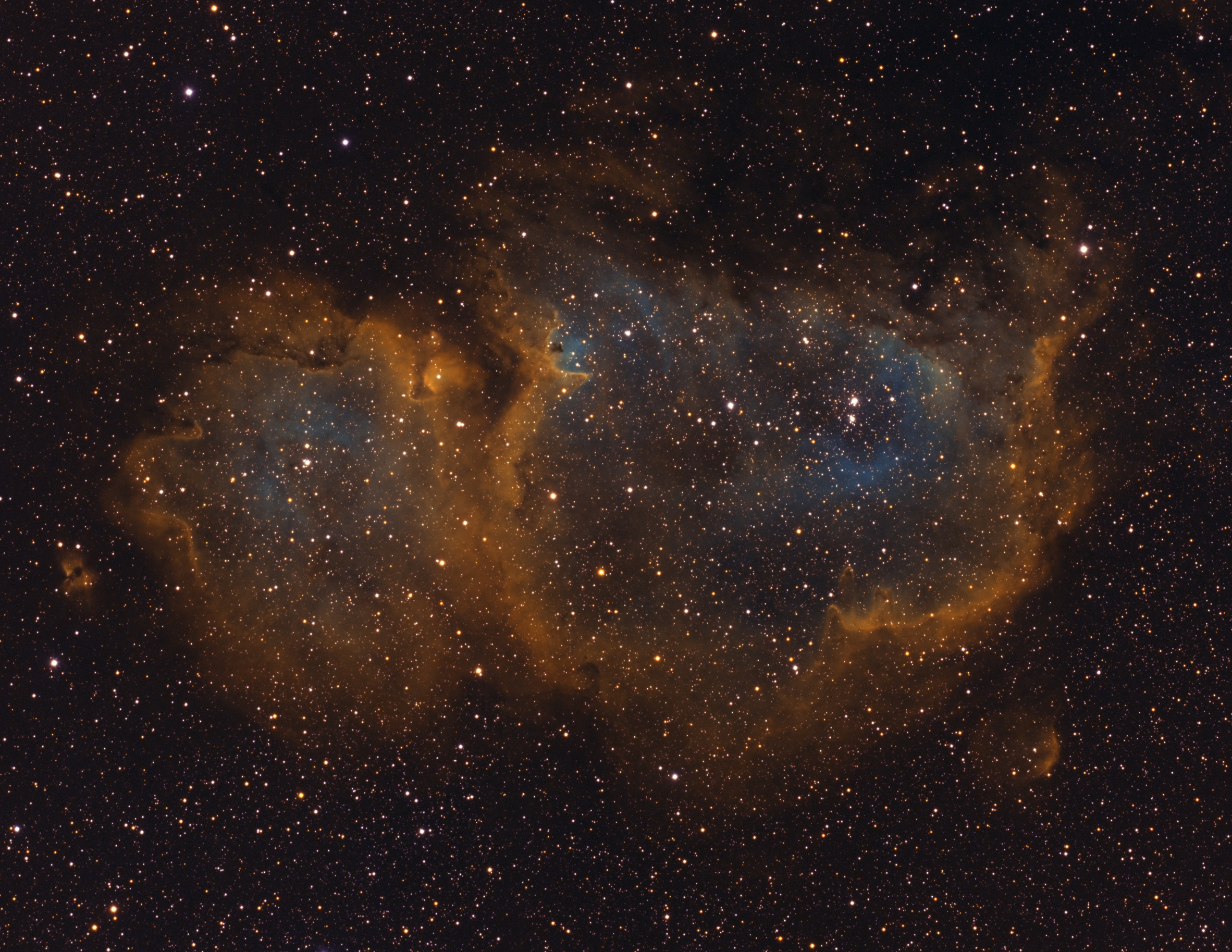
Soul Nebula (Sharpless 2-199, LBN 667) is emission nebulae in Cassiopeia. Several small open clusters are embedded in the nebula: CR 34, 632, and 634[citation needed] (in the head) and IC1848 (in the body). The object is more commonly called by the cluster designation IC1848.
Small emission nebula IC 1871 is present just left of the top of the head, and small emission nebulae 670 and 669 are just below the lower back area.
This complex is the eastern neighbor of IC1805 (Heart Nebula) and the two are often mentioned together as the “Heart and Soul”.


![NGC 2175 AP130EDT w/ 0.75X Reducer (f/6.3) Apogee Ascent A694 CCD Baader Narrowband Filters 7x20min Ha 10x20min O[III] 9x20min S[II]](http://vpfyhmdddkc.c.updraftclone.com/wp-content/uploads/2014/04/NGC-2175-Crop.jpg)